General information about Echinacea:
Like a well-aged Merlot or Cabernet Sauvignon, Echinacea are long-standing perennial plants whose faithful
bloom
will be a welcome sight every year by both humans and
butterflies
who are highly attracted to the flowers. Indeed, they are prolific bloomers with attractive foliage and unmistakable, beautifully formed flowers.
Echinacea are known for large flower heads that in fall turn to seed that
birds
love. If you have a cut flower garden, without question, you will want some because they are lovely and long-lasting in bouquets as well as dramatic in dried flower arrangements. As for
naturalizing, you can’t ask for more from a plant.
And when it comes to
borders,
Echinacea are frequently chosen for their ability to draw a visual dividing line between one area and another without the use of hard-scape materials.
Their coarse, deep green 8-inch leaves are serrated and act as a pleasing foil for smaller plants. Flowers abound in early summer and then continue until frost. The flower heads have
rays
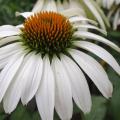
and greenish centers that change to an orange/brown over the season.
At maturity, the rays angle downward and the center assumes a distinctive cone shape (thus their nickname, Coneflower).
Coneflowers are tolerant of
poor soil, heat, humidity and
drought; in addition,
deer tend to avoid them.
If you are planting in southern zones, you’ll quickly be rewarded by their
rapid spread
while those who plant in northern zones will still appreciate a moderately fast spreading rate. Echinacea prefers well-drained soil in
full sun
so southern heat and humidity aren't bothersome and blooms last a long time both on the plant and in a vase.
Things to Note
You’ll want to keep in mind that
deadheading
will prolong flowering and prevent seeding.
At the same time, should you have the room to allow the flowers the opportunity of going to seed, you will be rewarded by
birds
going crazy for Echinacea seeds as well as enjoying the beauty of the seed heads throughout the winter (especially in snow). Remember, if you do choose to remove them, leave foliage at the plants' base to overwinter.
Interesting Facts
Not only is Echinacea a prized perennial for many gardeners, but it is also a potent medicine. Reports state that ingestion of this plant increases immune function, reduces the effects of colds and flues, fights off viral, bacterial and fungal infections, purifies the blood, and flushes waste from the lymphatic system.
Echinacea gets her name from the Greek word, "echinos" meaning hedgehog. Because of the spiky, hair-like foliage at the base of the plant, Echinacea garnered this nickname.
|


 (0)
(0)


 Full sun
  Part sun