







-
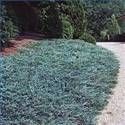
 Juniper - Blue ChipThere are two main types of ground covers: those you can walk on and those you cannot. You can choose from grasses, ferns, evergreens or perennial flowers. Ground covers are also typed by the amount of sun and water they need, as well as size--less than 6 inches tall or higher than 6 inches--and how good they are at controlling erosion. Some ground covers have a high tolerance for salt and work best for oceanfront homes.
 -
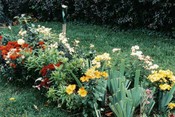
 PeriwinkleGround covers are used on steep slopes and in areas where the grass is hard to mow, and can be used in place of high-maintenance plants such as hedges. Flowering ground covers such as periwinkle are also used as edges around the lawn and planting beds.
 - Some ferns can grow as high as 30 inches. Low-growing varieties include grasses, flowers and evergreens that have the same features as their bigger cousins. Some ground covers can be used in high-traffic areas and those that do not like to be stepped on. Ground covers are hardy in most parts of the country, from zone 2 to zone 9
- Ground covers come in varieties that are hardy from zone 2 to zone 10. The zone is determined by the coldest temperature. For zone 2, it is -50 to -40 degrees Fahrenheit; zone 3 is -40 to -30 degrees; zone 4 is -30 to -20 degrees; zone 5 is -2- to -10 degrees; zone 6 is -10 to 0 degrees; zone 7 is 0 to 10 degrees; zone 8 is 10 to 20 degrees; zone 9 is 20 to 30 degrees, and zone 10 is 30 to 40 degrees.
- Determine the amount of shade and sun available for your ground cover and whether it will be in an area with a lot of foot traffic. Most ground covers need to be watered--if that won't work, consider the drought-resistant varieties.








Comments
redrock88130 said
on 9/11/2009 Great article, I tried to rate 5* but it wouldn't accept. Thanks again, Red