 (0)
(0)
Bottlebrush Grass (Elymus)
Elymus, the wildryes, offers the garden a grass language of blades, joints, and seed spikes rather than plumes of softness alone. Many species are cool-season grasses, greening early and holding narrow leaves that may be fresh green, gray-green, or strikingly blue, depending on the species and site. Some form clumps, while others move by rhizomes, and that difference matters greatly in design. Their habit can read as meadow-like and relaxed, but the flowering stems often introduce a firmer vertical line that feels more graphic than misty.
The inflorescences are usually bristled spikes, sometimes nodding, sometimes upright, with awns that catch side light and give the plant a dry, finely combed texture. In naturalistic plantings, native meadows, dune restorations, and erosion-control sites, Elymus can be both ornamental and practical, stabilizing soil while feeding or sheltering insects and wildlife. Blue-leaved forms are particularly handsome near silver foliage, dark evergreens, or warm stone, where the cool blades can look almost glazed. Yet the genus is too varied to treat casually; some species are restrained, while others are vigorous colonizers.
Good placement begins with knowing the species. Many Elymus tolerate sun, cold, drought, poor soil, or salt better than more pampered ornamentals, but rhizomatous types may overwhelm delicate neighbors in a refined border. They are most satisfying where movement and ecological function are welcome: meadow edges, large perennial drifts, rain gardens, coastal plantings, and informal slopes. Cut back tired stems when renewal is needed, and allow the seed spikes to stand where winter texture is valued. The genus brings a lean, resilient beauty, shaped by wind and open ground rather than by florid abundance.
Where the blue-leaved species are used ornamentally, editing is often the difference between elegance and invasion. A contained drift can look sophisticated and coastal; an unchecked rhizomatous colony can flatten a border's subtler relationships. Seed spikes may be left for winter line, but unwanted seedlings or runners should be removed promptly. Elymus is a grass for gardeners who appreciate vigor as a design force and are willing to give that vigor a suitable scale.
See photographs comparing average sizes of some bare roots and potted plants
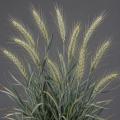 | Bottlebrush Grass {1-Gallon pot} 1 - 9: $39.47 each | 10 - 99: $37.50 each Bottlebrush Grass forms upright clumps of narrow green blades topped with airy bottlebrush seed heads in summer. A shade-tolerant native grass, it reaches 30-36 in. tall in part shade. Temporarily out of stock. Expected date unknown. |