 (0)
(0)
Winter Heath (Erica)
Erica, the heaths, brings evergreen intricacy to gardens that can provide the right soil and drainage. The plants are usually small to medium shrubs with needle-like or very narrow leaves arranged densely along slender stems, creating a fine, close texture that remains present through winter. In habit they may be low and carpeting, upright and twiggy, or softly mounded, but even the smallest forms have a crispness that makes them read as carefully woven. Their scale suits rock gardens, acidic banks, coastal gardens, and containers where detail matters.
The flowers are small but abundant, commonly urn-shaped or tubular bells in white, pink, rose, red, lavender, or greenish tones. Depending on species, they may bloom in winter, spring, summer, or autumn, making the genus unusually valuable for extending seasonal interest. A flowering heath can look as if color has been threaded through its branches, not placed on top of them, and bees often visit during mild weather when other nectar is scarce. The effect is intimate and textural rather than lavish, especially compelling when paired with dwarf conifers, grasses, or pale stone.
Erica culture is exacting where soils are alkaline, heavy, or poorly drained. Many species prefer acidic, sharply drained, low-fertility conditions, though tolerances vary, and some Mediterranean or South African species are tender outside mild climates. Pruning should be light and timed after flowering, since cutting into old wood may leave gaps that recover slowly. Where the site is suitable, Erica supplies a polished evergreen foundation and a long sequence of bloom. Where the site is wrong, it declines with little romance. That honesty is part of its value: it rewards careful siting with color, texture, and winter presence of unusual refinement.
For gardeners accustomed to richer border plants, Erica requires a useful shift in expectation. It should be planted shallowly, mulched lightly with acidic organic material or grit as appropriate, and never forced with heavy feeding. Grouping related colors in generous patches creates more dignity than scattering small plants like ornaments. In the right soil, the genus can make the leanest months feel furnished, with bloom and evergreen texture held very close to the ground.
See photographs comparing average sizes of some bare roots and potted plants
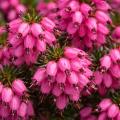 | Winter Heath 'Kramer's Red' {2-Gallon pot} 1 - 9: $85.47 each | 10 - 99: $81.20 each Winter Heath 'Kramer's Red' is a compact, evergreen heath with masses of rosy-magenta blooms from winter into spring. Reaches about 18-24 inches tall and 24-36 inches wide in full sun to part shade. In stock. |
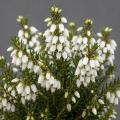 | Winter Heath 'White' {2-Gallon pot} 1 - 9: $85.47 each | 10 - 99: $81.20 each Low, evergreen Winter Heath 'White' that forms a neat, spreading carpet with clusters of white bell-shaped flowers in late winter to early spring. Grows 6-12 in. tall in full sun to part shade with sharp drainage. In stock. |