 (0)
(0)
Sea Holly (Eryngium)
Eryngium, the sea hollies, has an arresting beauty built from spines, wax, and metallic color. Many species form basal rosettes of divided, toothed, or thistle-like leaves, sometimes glossy green and sometimes blue-gray, with a firmness that announces the plant's preference for sun and drainage. Flowering stems rise with a deliberate stiffness, branching into cone-like heads surrounded by spiny bracts. The outline is sharp rather than lush, yet the surfaces can appear cool, polished, and almost luminous when the blue or silver tones develop fully.
The inflorescences are not flowers in the soft garden sense; they are intricate heads that gather many tiny blooms into a structure of cones, collars, and points. Colors range from greenish white to steel blue, violet, pewter, and amethyst, often deepening in dry, bright conditions. Bees are strongly drawn to them, and the stems remain handsome as they dry, extending the plant's usefulness into autumn arrangements and winter texture. Eryngium pairs especially well with grasses, yarrow, lavender, nepeta, sedums, and other plants that share its appetite for open light.
Most species resent heavy wet soil, excessive fertility, and transplanting once their taproots are established. They should be sited where they can remain, in full sun with sharp drainage, and allowed to express their natural austerity. Some self-sow in favorable conditions, while others are more particular and slow. The genus is valuable when a border needs contrast: something cool among hot colors, something rigid among billowing stems, something tactile without softness. Eryngium's elegance is exacting and slightly dangerous, a reminder that refinement in plants can come from armor as readily as from silk.
Its color also benefits from careful neighboring tones. Near silver foliage, it can seem almost spectral; beside orange, rust, or deep purple, the blue bracts become sharper and more luxurious. Cutting a few stems for drying will not diminish the plant if enough remain for insects and winter form. Eryngium is a useful reminder that a border need not be all comfort. A little coolness, a little danger, and a little geometry can make the surrounding softness more persuasive.
See photographs comparing average sizes of some bare roots and potted plants
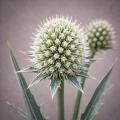 | Rattlesnake Master {1-Gallon pot} 1 - 9: $33.47 each | 10 - 99: $31.80 each Rattlesnake Master forms a bold clump of yucca-like leaves topped with buttonlike greenish-white flower heads. Grows about 36-60 inches tall in full sun, with good drought tolerance once established. Temporarily out of stock. Expected date unknown. |
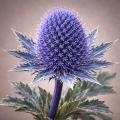 | Sea Holly 'Big Blue' {1-Gallon pot} 1 - 9: $33.47 each | 10 - 99: $31.80 each Spiky, steel-blue flower heads and bracts make Sea Holly 'Big Blue' a standout for sunny borders and cutting. Upright clumps reach 24-30 in tall and handle heat and dry, well-drained soils. Temporarily out of stock. Expected date unknown. |
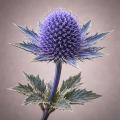 | Sea Holly 'Blue Glitter' {2-Gallon pot} 1 - 9: $43.47 each | 10 - 99: $41.30 each Sea Holly 'Blue Glitter' is a bold, thistle-like sea holly with metallic blue flower heads on sturdy stems. A standout for sunny, well-drained spots, it matures about 24-36 in. tall and is great for cutting. In stock. |