 (0)
(0)
Creeping Fig (Ficus)
Ficus is an immense genus whose members range from temperate edible figs to tropical shade trees, banyans, epiphytes, vines, and familiar houseplants. What unites many of them is a latex-bearing body, simple leaves of notable substance, and the unusual fig fruit, a syconium, in which flowers are held inside a fleshy structure rather than displayed openly. In the garden or conservatory, the leaves often carry the first impression: broad and matte, small and glossy, fiddle-shaped, weeping, leathery, or boldly lobed, depending on species.
The ornamental character of Ficus is frequently architectural. A weeping fig softens an interior with cascading branchlets, a rubber plant offers dark polished leaves, a creeping fig clothes walls with close green texture, and an edible fig spreads generous lobed foliage that feels almost Mediterranean when warmed by sun. Many tropical species form aerial roots or powerful buttresses in suitable climates, creating sheltering shade and a sense of age. The fruit may feed birds, bats, insects, and people, though edibility varies, and fig-wasp relationships in many species are among the genus's most remarkable botanical facts.
Culture must be matched carefully to species. Edible figs need sun, drainage, and climate-appropriate pruning, while indoor figs require stable light, careful watering, and protection from cold drafts. Large tropical species can become invasive or structurally overwhelming in frost-free regions, with roots that are unsuitable near foundations, drains, or paving. The milky sap can irritate skin. Ficus is therefore not a single garden mood but a whole botanical world: intimate in a pot, generous in fruit, monumental in the tropics, and always connected to the deep, hidden life of leaves, latex, and enclosed flowers.
For interior design, Ficus should be treated as a living tree rather than a disposable decoration. Stable light, room for roots, and a consistent watering rhythm help prevent the leaf drop that follows sudden changes. Outdoors in warm regions, scale must be considered with equal seriousness, because a charming young plant may become an immense organism. The genus asks for respect at both extremes: the potted specimen in a room and the banyan capable of remaking a landscape.
See photographs comparing average sizes of some bare roots and potted plants
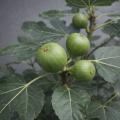 | Common Fig 'Fignominal' {2-Gallon pot} 1 - 9: $123.97 each | 10 - 99: $117.77 each Common Fig 'Fignominal' is a compact fig with bold, lobed leaves and sweet, edible fruit. Grows about 24-36 in. tall, thrives in full sun to part shade, and is ideal for patio pots. In stock. |
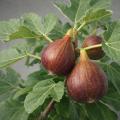 | Common Fig 'Vern's Brown Turkey' {3-Gallon pot} 1 - 9: $139.97 each | 10 - 99: $132.97 each Common Fig 'Vern's Brown Turkey' is a reliable fig with bold, lobed leaves and sweet, edible fruit. Grows about 10-12 ft tall in full sun to part shade; a great choice for patios or gardens. In stock. |
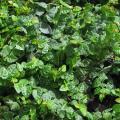 | Creeping Fig {3 1/4 in. Pots min 25} 25 - 249: $6.57 each | 250 - 999: $6.27 each (Fig Vine, Fig Ivy, Climbing Fig, Creeping Rubber Plant) A beautiful, waxy green-leaved, fast and easily grown evergreen woody vine, beloved in warm climates. Will climb 20 feet or more, mature prostrate height 1/2 to 1 1/2". In stock. |
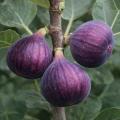 | Fig 'Bensonhurst Purple' {3-Gallon pot} 1 - 9: $139.97 each | 10 - 99: $132.97 each Grow Fig 'Bensonhurst Purple' for bold, tropical-looking foliage and tasty figs. This compact fruit tree matures about 10-15 ft tall and fits sunny sites, also handling part shade in many gardens. In stock. |
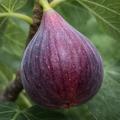 | Fig 'Italian Everbearing' {3-Gallon pot} 1 - 9: $139.97 each | 10 - 99: $132.97 each Fig 'Italian Everbearing' is a productive, deciduous fig with bold, lobed leaves and edible fruit. Grows about 12-15 ft tall and wide, best in full sun to part shade. In stock. |
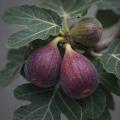 | Fig 'Little Miss Figgy™' {3-Gallon pot} 1 - 9: $139.97 each | 10 - 99: $132.97 each Fig Little Miss Figgy™ is a compact fig for patios and small gardens, bearing sweet dark purple fruit. Grows about 48-72 in. tall and thrives in full sun with well-drained soil. In stock. |