 (0)
(0)
Honeysuckle (Lonicera)
Lonicera, the honeysuckles, includes twining vines, arching shrubs, evergreen groundcovers, and fragrant flowering plants of great garden appeal and significant ecological caution. Leaves are usually opposite, sometimes fused around the stem, and the habit may be delicate and climbing or dense and shrubby. Native species can be valuable to pollinators and birds, while several introduced shrub and vine honeysuckles are invasive in parts of North America and elsewhere. The genus must therefore be chosen with precision.
The flowers are often tubular, two-lipped, or flared, in white, yellow, cream, pink, red, orange, or purple tones, and many are fragrant, especially in evening or warm air. Hummingbirds, bees, moths, and butterflies visit suitable forms, and berries may follow in red, orange, blue, or black. Climbing honeysuckles can bring perfume to an arbor or fence, while winter-flowering shrubs offer scent in the cold months. Yet fruit spread by birds can carry invasive species into woodlands, where they leaf out early and suppress native plants.
Lonicera culture varies widely, but many species tolerate sun to part shade and ordinary well-drained soil. Vines need support and pruning to prevent tangles, while shrubs may require renewal cutting. Before planting, gardeners should check regional invasive lists and favor native or noninvasive selections. Used responsibly, honeysuckle offers real sensual pleasure: paired leaves, tubular flowers, fragrance held in evening air, and wildlife movement around the bloom. Used carelessly, it can become a lasting problem. The genus asks for discernment equal to its charm.
A well-placed honeysuckle can make a garden entrance memorable, especially when fragrance gathers near a gate or evening seating area. Support should be strong enough to carry mature growth, and pruning should preserve flowering wood while preventing congestion. Native coral honeysuckles and other regionally appropriate species often provide beauty without the ecological cost of invasive types. Lonicera's sensual appeal is undeniable, but its finest use comes when perfume, wildlife value, and responsibility are held together.
See photographs comparing average sizes of some bare roots and potted plants
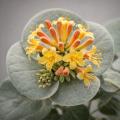 | Grape Honeysuckle 'Kintzley's Ghost®' {2-Gallon pot} 1 - 9: $88.47 each | 10 - 99: $84.05 each Grape Honeysuckle 'Kintzley's Ghost®' is a twining native honeysuckle with round powdery-blue bracts and yellow spring blooms. Grows 72-144 in tall with support, in full sun to part shade. In stock. |
 | Honeysuckle 'Coral Star' {2-Gallon pot} 1 - 9: $88.47 each | 10 - 99: $84.05 each Honeysuckle 'Coral Star' is a vigorous twining vine with fragrant coral-to-yellow tubular blooms that draw hummingbirds and butterflies. Reaches about 9-10 ft tall and thrives in full sun to part shade. In stock. |
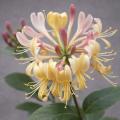 | Honeysuckle 'Scentsation' {2-Gallon pot} 1 - 9: $88.47 each | 10 - 99: $84.05 each Honeysuckle 'Scentsation' is a vigorous twining vine with richly fragrant, creamy-yellow blooms from mid-spring into late summer. Climbs 120-180" and flowers best in full sun to part shade. In stock. |
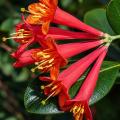 | Trumpet Honeysuckle 'Major Wheeler' {2-Gallon pot} 1 - 9: $88.47 each | 10 - 99: $84.05 each Trumpet Honeysuckle 'Major Wheeler' is a vigorous twining vine with scarlet tubular blooms from late spring through summer. Grows about 36-96 in. tall; performs best in sun to part shade. Temporarily out of stock. Expected date unknown. |