NOTE: This product ships from a location that requires extra lead time.
Orders placed by 10am EST on Thursday will
usually ship early the following week.
This product can be
These plants are grown in a 10" x 20" tray
(view sample).
Size of the cells in a 72-cell tray: depth 2.35" x 1.625" x 1.625".
Volume: 4 cubic inches.
View samples of all cell sizes.
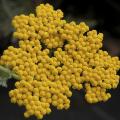
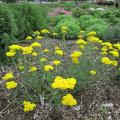
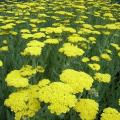
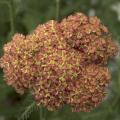
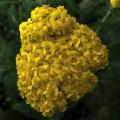
Moonshine's sunny-yellow flower clusters seem to flutter like canaries with wings spread aloft feathery blue-grey foliage. Her fragrant and finely dissected silvery-sage foliage remains evergreen and is the perfect backdrop for the bright blossoms (up to 4 inches wide) from June to September. If you supply good drainage, Moonshine will tolerate drought and unlike some varieties even tolerates humidity. Though she has a fast growth rate, Moonshine is clump forming and does not spread indefinitely like other Achilleas. Gardeners often choose Moonshine because she is shorter and more compact than other Achilleas. Interesting Fact Moonshine received the Royal Horticultural Society's Award of Garden Merit in 1993. Gardener Tips Its basal leaves, but not its upper stems, are semi-evergreen. Often though, with such stringy leaves, gardeners don't find the look desirable in winter gardens. However, consider employing this trick for a soft, sage evergreen display in winter. When it is time to deadhead after the last flourish of summer and early autumn blooms, trim the majority of the foliage to a 6-inch height. It returns immediately, but with basal leaves only. Essentially, you achieve a shorter, more compact plant which will have lower flower stems for its final mid-autumn rebloom. Whatever remains of the leaves lasts through winter as a tidy and fern-like clump which is absolutely delightful against a snow-covered garden!
General information about Achillea (Yarrow):
Like vintage lace, Achillea, commonly called yarrow, when blossoming in your garden will take you back to your grandmother’s decorative doilies.
From mid-summer through autumn dessert-plate size flower clusters sit perched above feathery sage foliage ready to serve
butterflies
their sweet nectar.
Herbaceous
in nature, most yarrows reach heights of 2-4 feet and are delightfully durable tolerating
drought
and
poor soil
without fading.
We offer
golden
and
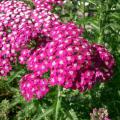
pink
varieties that will be perfect as a back-border,
in rock gardens or planted in mass creating the effect of a wildflower meadow.
In fact, because it is self-sowing and will spread indefinitely, some gardeners opt to use it as a lawn-substitute.
Yarrow can become slightly untidy as it spreads, so gardeners often place it in the background creating a wispy web of leaves covered in rich, substantial
blooms.
With a
moderate
to
fast
growth rate and willingness to tolerate
poor soil,
heat, humidity,
drought,
pollution,
rabbits
and
slopes
as well as moderate tolerance of
salt
and infrequent
foot traffic,
yarrow is one of the hardiest perennials available.
Yarrow is prized for her flower clusters that are perfect for dried arrangements or fresh in a vase. These lovely perennials lend an alluring sense of days gone by to any garden.
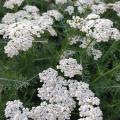
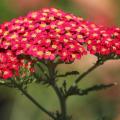
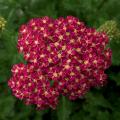
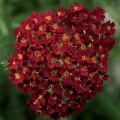
Note: the more sun Achillea gets, the lighter the bloom color will be. For example, in full sun in southern zones Oertel's Rose can be so light as to appear white.
Interesting Facts
Yarrow came to North America from the Caucasus region bordering Europe and Asia.
The word "Achillea" refers to the Greek hero, Achilles who used yarrow for himself and for his soldiers. The Greeks began using yarrow over 3,000 years ago for treating external wounds on the skin. Both the flowers and leaves of yarrow were eaten or made into a tincture-tea. Often people chewed the leaves to relieve pain of a tooth ache. The fresh leaves were used in a variety of medicinal applications including fevers, stopping bleeding, menstrual issues, circulation and even gastrointestinal concerns.
In culinary applications, the leaves of the yarrow can be used cooked or raw and are best
eaten
when young. Slightly bitter, they add a pungent punch to salads. They have a bitter flavor but are good in mixed salads and best used when they are young. The flowers are often used in teas.
Gardener Tips
If you enjoy organic gardening approaches, Yarrow is an ideal companion plant.
It attracts predatory wasps that use insect pests as food for their larvae. Similarly, it attracts ladybugs and hoverflies, also desirable garden bugs.
We love pairing
Autumn Joy Stonecrop,
Phlox,
and any of our
daylilies
with yarrow.
The result is a constant display of color from early spring through autumn.
See all Achillea
|
Specifications
Shipping
Care
Deadheading
spent flower heads is recommended to promote extended blooming. For best growth, cut stems back to a couple of inches above the soil after the first killing frost. Apply a thin layer of compost each spring for more vivid color, followed by a 2-inch layer of mulch to retain moisture and control weeds. Water plants during the summer if rainfall is less than one inch per week. Requires good drainage. Divide plants every 3 to 4 years as new growth begins in the spring, lifting plants and dividing them into clumps. Yarrow is easily dividable by simply digging up a large quantity and shaking loose into clumps. Ideally, this is done in springtime though yarrow will tolerate propagation virtually anytime.
General information that applies to all plants:
- Ground
preparation, fertilization, pH
- Planting
instructions
- Explanation
and description of bare roots
- How
to plant bare root plants
- If you
cannot plant bare roots right away
Reviews
Related Products
Please note: This product is currently out of stock. It will ship as soon as it becomes available, or on a later date you specify.
After you click PROCEED, your cart will display the current estimated restock date for this item.
Once the item is back in stock, it will ship as soon as possible unless you request a later ship date during checkout (using Shipping Comments).
WOULD YOU LIKE TO RECEIVE DISCOUNTS?
Your privacy is important to us, we will not send you any unnecessary email.
If you wish to be advised of our sales (2-4 times per year),
join our mail list.
|
 (0)
(0)

 Full sun