(0)
(0)
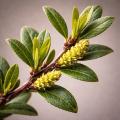
Northern Bayberry {2-Gallon pot}
|
|

Myrica pensylvanica (AKA Morella pensylvanica, Bayberry, Wax Myrtle, Candleberry)
Pronunciation: my-RY-kuh pen-sill-VAN-ih-kuh
Product: 201924
Product: 201924
Shipping description: This product cannot be shipped to ID, and cannot be shipped from early May to early October to AZ, CA, MT, NV, OR, UT, or WA.
NOTE: Shipments to AZ, CA, MT, NV, OR, UT, or WA require 7-10 days to prepare the required paperwork.
NOTE: Shipments to AZ, CA, MT, NV, OR, UT, or WA require 7-10 days to prepare the required paperwork.
FREE SHIPPING!
| 1 - 9: $82.97 each | 10 - 99: $78.82 each | 100+: $74.67 each |
In stock.
|
|||
| Content note — AI-assisted: Some images, descriptions, and specs on this page may have been generated with AI and might not be perfect. If you’re new to this plant, please check verified photos [here] and feel free to contact us with questions. |
 Full sun
  Part sun